Header and SDG logo images credited below.
|

|

|

|
DATELINE: July, 2024
RESILIENCE AMIDST CLIMATE CRISIS:
A MIDWIFE'S JOURNEY IN UGANDA
A MIDWIFE'S JOURNEY IN UGANDA
By Penenah ‘Penny’ Kiconco, Ugandan Midwife
|
“As we face escalating environmental challenges, it becomes imperative to explore how climate change impacts maternal health and the midwifery profession.”
In the realm of global health, midwifery plays a crucial role in ensuring safe pregnancies and deliveries, particularly in regions with limited access to healthcare. However, an often-overlooked aspect of midwifery is its intersection with climate change. As we face escalating environmental challenges, it becomes imperative to explore how climate change impacts maternal health and the midwifery profession.
“Known for its tropical climate, Uganda now faces prolonged droughts, floods, and landslides.”
|

Ms. Kiconco overlooking drought conditions. Used with permission.
|
Uganda, like many other countries around the globe, has been severely affected by climate change. Known for its tropical climate, the country now faces prolonged droughts, floods, and landslides, leading to disruptions in health services and agriculture, the backbone of our nation. Climate change has exacerbated existing health vulnerabilities, such as insufficient access to healthcare and education, safe water, and sanitation. Realizing sexual and reproductive health is crucial for achieving gender equality and supporting vulnerable communities.

Displaced families due to floods. Used with permission.
|
“Thousands of families were displaced, and women were unable to access midwifery care.... This experience made me think deeply about how to better support vulnerable groups amidst these climate crises.”
|
A nerve-chilling moment in my career was when I visited Ntoroko District after the flooding of the Lamia Riverbank. Thousands of families were displaced, and women were unable to access antenatal services, family planning, intra-partum care, and postnatal care. Despite our efforts to provide mobile services, walking long distances and climbing hills, it was not easy. However, our dedication to serving the nation and caring for mothers kept us going. Unfortunately, not every woman and girl who needed help received it. This experience made me think deeply about how to better support vulnerable groups amidst these climate crises.
|
”I've worked individually
and with community midwives and stood to address these challenges — calling for urgent action to train fellow midwives about preparedness and and emergency care in such climate crises.” |
Most non-governmental organizations came to rescue displaced people and families, but they placed less focus on sexual and reproductive health. This was not a priority, leaving me to wonder how vulnerable women manage to cope during such trying times. The climate crisis has directly impacted women's health, affecting contraceptive use, fertility intentions, pregnancy outcomes, and increasing risks of gender-based violence and miscarriages. I have worked individually and with groups of community midwives and stood to address these challenges, calling for urgent action to train fellow midwives about disaster preparedness and emergency care during such climate crises.
|
|
In the Karamoja region, prolonged dry spells have affected maternal and child nutrition, causing malnutrition, preterm deliveries, and anemia in pregnancy. Although the government has provided food, it is insufficient for the high population. This led me to engage with community leaders in dialogues about their inclusion in policy creation and governance on health systems and climate change. Most community leaders did not understand how they were being affected by climate change, and policymakers did not involve them in decision-making, which directly impacts implementation at the grassroots level.
“Prolonged dry spells have
[also] affected maternal and child nutrition.” |

Used with appreciative attribution to Richard Nuwe on X
|
I have engaged several stakeholders to promote resilience through strengthening healthcare infrastructure and early warning systems for newborns and mothers. There is still a lack of policy influence, but by collaborating with policymakers and professional organizations, I look forward to creating an advocacy group of midwives through the National Midwifery Association of Uganda. This group will support initiatives such as reducing carbon emissions in healthcare facilities, promoting renewable energy sources, and integrating climate change adaptation into maternal and child health policies.

Author's team with local councils about climate change in communities. Used with permission.

Used with appreciative attribution to https://pixers.us/canvas-prints
|
“...reducing carbon emissions in healthcare facilities, promoting renewable energy sources, and integrating climate change adaptation into maternal and child health policies.”
One practical approach I have taken is teaching midwives adaptation strategies in clinical practices, such as providing cool water and encouraging the planting of trees for shade where women can rest during hot days. However, research and innovation remain key in understanding the health impacts of climate change on maternal and child health. Research contributes to evidence-based guidelines and best practices for climate-resilient maternity care.
|
Being a speaker at the 64th Institute of Tropical Medicine Colloquium in Kathmandu, Nepal, in November 2023, I shared my research findings on how climate change has affected pregnant and postpartum mothers. This experience opened my eyes to the gaps in our readiness to support mothers in crises. Young girls shared stories of how floods had washed away their parents' small-scale businesses, leading to early marriages and increased teenage pregnancies due to their inability to afford school fees.
|
“We must raise awareness and train midwives on risk reduction [and] empower women to adapt to climate change.... Midwives have a vital climate solution.”
|
We must raise awareness and train midwives on risk reduction, empower women to adapt to climate change, and promote the use of reusable sanitary towels. Midwives have been a vital climate solution because they work directly with communities, empowering and inspiring them to take action in addressing the climate crisis and social protection mechanisms should be put in place to ensure that vulnerable groups and communities are empowered to adapt effectively and adequately to the impacts of climate change.
|
|
Therefore, there is still need to support and encourage vulnerable groups to engage in sustainable adaptation mechanisms which is crucial. Increasing health workers' awareness of the relationship between climate change and health, integrating climate change-related issues into economic policies and action plans that address the needs of vulnerable groups thus leading to a better society and a more livable world amidst our changing climate.
As we move forward, collaboration between global health organizations, governments, and communities is key. Together, we can create a sustainable future where midwives are empowered to provide exceptional care, regardless of the challenges posed by our changing climate. “Collaboration between health organizations, governments,
and communities is key. ” |

Pointing to areas affected by climage change. Used with permission.
|

Penenah 'Penny' Kiconco, Ugandan Midwife. From her files.
|
About the Author
Penenah 'Penny' Kiconco is a dedicated midwife with a Bachelor's degree in Midwifery Science. She stands as a stalwart leader and advocate for Sexual & Reproductive Health Rights (SRHR) with over 12 years of invaluable experience in Uganda's healthcare sector. Actively involved with the National Midwifery Association of Uganda—a member association of the International Confederation of Midwifery (ICM)—she has been at the forefront of initiatives aimed at enhancing maternity and child healthcare capabilities.
|
Passionate about SRHR, midwifery, and climate change, her commitment extends beyond borders. At the 64th Colloquium of the Institute of Tropical Medicine in Nepal, she delivered a compelling address on the impact of climate change on ‘Sexual & Reproductive Health Rights’ (SRHR) in Uganda, showcasing her international engagement. This opportunity allowed her to share experiences and insights on how climate change has exacerbated the challenges faced by midwives and communities in Uganda.
One of her remarkable achievements includes completing SRHR capacity-building programs at Lund University and the Karolinska Institute in Sweden, where she honed my leadership skills in public health. Additionally, she is a certified storyteller recognized by The Moth and serves on the ICM working group committee for indigenous midwifery representing the region of Africa.
One of her remarkable achievements includes completing SRHR capacity-building programs at Lund University and the Karolinska Institute in Sweden, where she honed my leadership skills in public health. Additionally, she is a certified storyteller recognized by The Moth and serves on the ICM working group committee for indigenous midwifery representing the region of Africa.
DATELINE: March, 2022
ACHIEVING UN SDGS BY ENDING GENDER-BASED VIOLENCE
|
By Harriet Barbra Nakanwagi — Medical Clinical Officer & Paralegal
Everyone has the right to live free from violence. But many continue to face violence every day because of their gender. This is referred to as Gender-Based Violence (GBV) and is a violation of human rights.
Introduction & Background
Gender-Based Violence (GBV) is identified as any harm inflicted upon an individual against their will — through abuse of power — and based on unequal relations between men and women, and between boys and girls — as defined by the Legal Aid Service Providers' Network (LASPNET) in 2021. Gender-Based Violence can be physical, sexual, emotional and / or psychological — as detailed in the UN Declaration on the Elimination of Violence Against Women in 1993. In the Ugandan setting, GBV can also have severe economic consequences. |
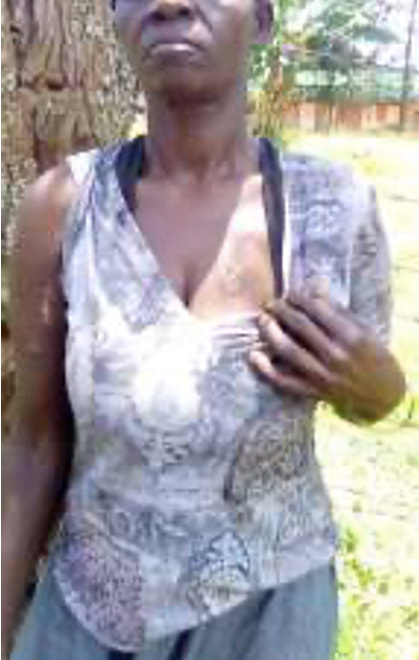
A victim helped by the author, shared with permission.
|
|
“The COVID pandemic has escalated this suffering.”
|
Whereas everybody can be exposed to GBV, more women and girls are victims of this vice — as compared to men and boys. Much as GBV has always been present in communities, the COVID pandemic and subsequent national lockdowns have escalated this suffering. Since early 2020, there has been a steady increase in the number of GBV cases in Uganda, and more so in the Ugandan Districts which make up greater Mukono (Mukono, Kayunga and Buikwe).
|
|
Gender-Based Violence manifests in different ways depending on the type as follows:
• Physical violence manifests through physical bodily harm on individuals — mostly women and young girls, but also children — through beating, battering, burning, cutting, and strangling. • Related sexual violence manifests through sexual abuse, unwanted sexual advances, rape, defilement, forced prostitution, and child/ early marriages. • Emotional/ Psycho-social Violence manifests as humiliation, quarrels, verbal abuses, threats of violence, isolation and confinement against the victim’s will.
|
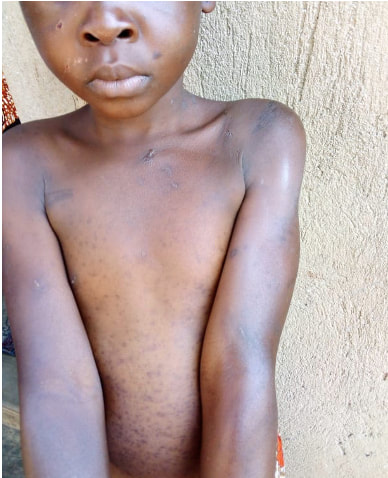
Another victim shared with permission.
|
During the COVID pandemic — because schools have been closed and adults are also staying idle at home — the most vulnerable groups of people, that is, women and children, have been exposed to the different forms of GBV — much more than before. There have been increasing cases in all of the negative outcomes of this violence — including instances of rape, defilement, early marriages and teenage pregnancies, prostitution, and incest.
|
The consequences have resulted in many more teenagers becoming pregnant before they are ready to be mothers. As well, there has been an increase in unsafe abortions, and in HIV incidences. Separations between couples and parents have also been rampant. As well, the COVID pandemic has caused severe economic hardships in families. Hence there have been severe manifestations of physical and emotional/ psychological violence — resulting in increased incidence of mental illness and higher prevalence of physical harms.
|
“...many more teenagers [are] becoming pregnant before they are ready to be mothers. As well, there has been a significant increase in unsafe abortions, and in HIV incidences.”
|
It is also worth noting that — apart from the physical, sexual and mental health consequences that Gender-Based Violence renders to victims — these threatening practices also reinforce inequalities between men and women and between boys and girls. These compromise health, increase the vulnerability of women to access reproductive health services, and decrease the victims’ abilities to contribute their productivity within their families, and within their communities at large.
|
Caring for This Suffering
Those of us who are professionally addressing this issue are developing several innovative approaches to improve the lives of people suffering from GBV. All these interventions can be identified as promoting six of the 17 the United Nations Sustainable Development Goals (SDGs). |
|
|
Three Innovative Grassroots Actions for Six Global Goals
One of the first innovative actions has been psycho-social support to GBV survivors. This helps to promote good health. It prevents suicide and mental illnesses — achieving SDG #3 ‘Good Health and Well-Being.’ This support also helps to prevent crime, calms GBV survivors down, and helps to provide referral pathways for these victims to find support and to develop management approaches to health and healing. Another approach is to provide medical examinations of GBV survivors and to develop related and adequate medical reports. These actions help to strengthen the formal justice systems by providing evidence of the violence. Once justice prevails, then inequalities are reduced — addressing SDG #10. As well, SDG #16 ‘Peace and Justice’ is realized through stronger institutions. Of course, SDG#5 ‘Gender Equality’ is also being promoted and achieved. A third significant approach includes treating and managing the health problems and illnesses that arise out of Gender-Based Violence — such as wounds, dislocations, and burns. As well, young women and teen-age girls — who are often prime GBV victims — need related antenatal care, post-abortion care, HIV care, health- counseling services, and management of sexually-transmitted infections. These actions promote the health and wellbeing of victims, again achieving SDG #3. As these vulnerable members of society are kept healthier — and their well-being is promoted — their productivity is increased. This outcome promotes SDG #1 ‘No Poverty’, and SDG #2 ‘Zero Hunger’ because African women — as compared to men — make immense contributions to food production in homes, alongside their children. ”As these vulnerable members of society are kept healthier — and their well-being is promoted — their productivity is increased. ”
|
|
|
As a Paralegal working with Action Against Violence-Uganda (AAV-U) a local based organization for volunteers, alongside Legal Aid Service Provider's Network (LASPNET), I have made a series of sensitization drives in the communities to increase awareness about and concern for addressing Gender-Based Violence and to show how these wounds can be healed at many levels. In addition, GBV community dialogues and stakeholder's dialogues have been used to educate the community members and leaders about GBV, its causes, it effects, and the roles different individuals and stakeholders can take in the prevention of GBV. These measures demonstrate SDG # 17 ‘Partnerships for the Goals.’
|
Positive Outcomes for Victims, Their Households and Their Communities
|
With these positive outcomes, the suffering associated with Gender-Based Violence can be significantly reduced and local communities — who may have been apathetic or feeling hopeless against this seemingly perpetual suffering — can witness and appreciate what can be done to promote the healing that is so needed in these cases.
Ensuring that Gender-Based Violence survivors receive health-care and justice — encouraging them to speak up — and empowering community members to respond to GBV in continuing ways — all these activities can and will help to further reduce or even eliminate Gender Based Violence, leading to making a major contribution to achieving several key United Nations Sustainable Development Goals by 2030. “With these positive outcomes, the suffering associated with Gender-Based Violence can be significantly reduced.”
|
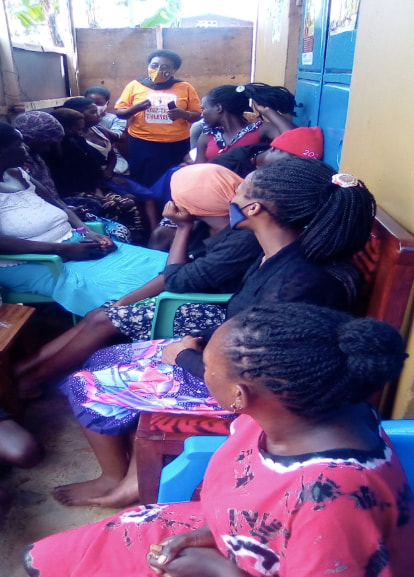
Community Support Groups shared with permission.
|

|
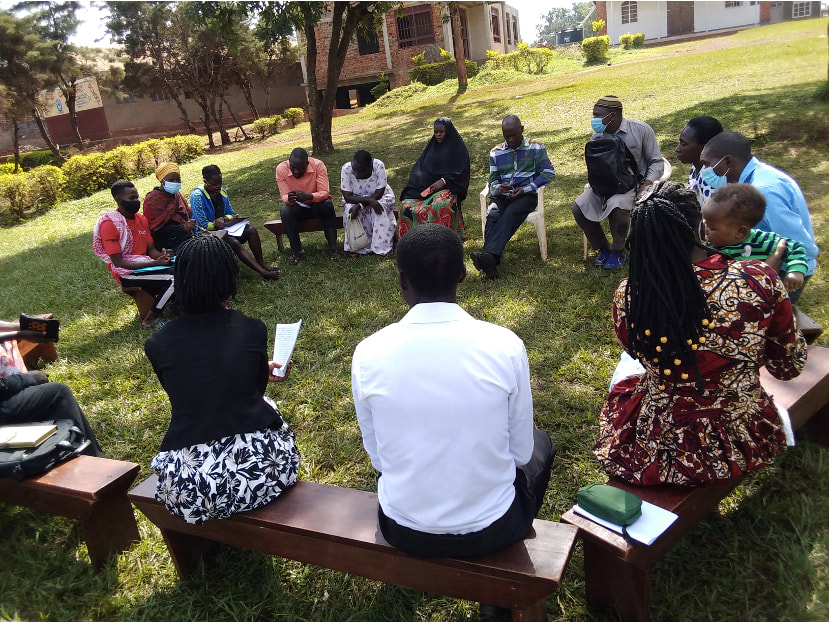
Gender-Based Violence sensitization sessions for different groups of community members, shared with permission.
|
About the Author
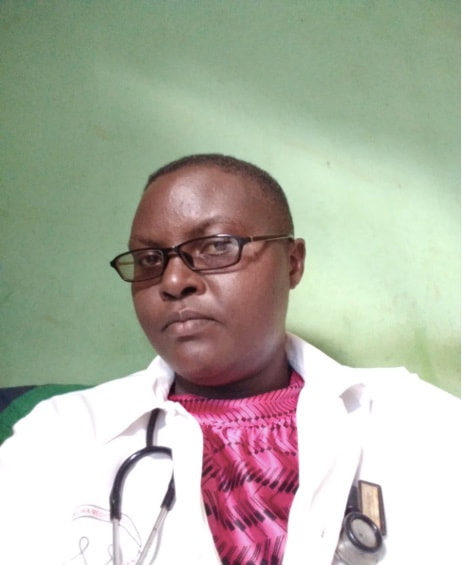
|
Harriet Barbra Nakanwagi is a female Ugandan, a wife and mother, a practicing Medical Clinical Officer, an Educationist, a Scientist, and a multi-professional Counselor.
She also volunteers as a Paralegal with Action Against Violence-Uganda (AAV- U). Besides elementary, secondary education and short courses, she holds the following academic qualifications: • Diploma in Clinical Medicine and Community Health • Bachelor's Degree in Science (Chemistry, Zoology & Botany) • Diploma in Secondary Education (Chemistry & Biology) She received her first qualification in 2002 and has vast experience in all the professional fields of her expertise. |
|
She is passionate about:
• Further medical professional development • Quality and equal service delivery • Serving humanity to the best of her abilities • Working under minimum supervision • Beating deadlines • Time management • Innovations • Discovery Ms. Nakanwagi has a beautiful family which she cherishes — and owes her work to the time she sometimes takes away from them — in order to serve humanity. |
Her core values are:
• Efficiency • Authenticity • Compassionate • Consistency • Dependability • Reliability • Optimism • High integrity • Ethics • Flexibility • Respect for others • Open-mindedness • Honesty & Loyalty |

|
|
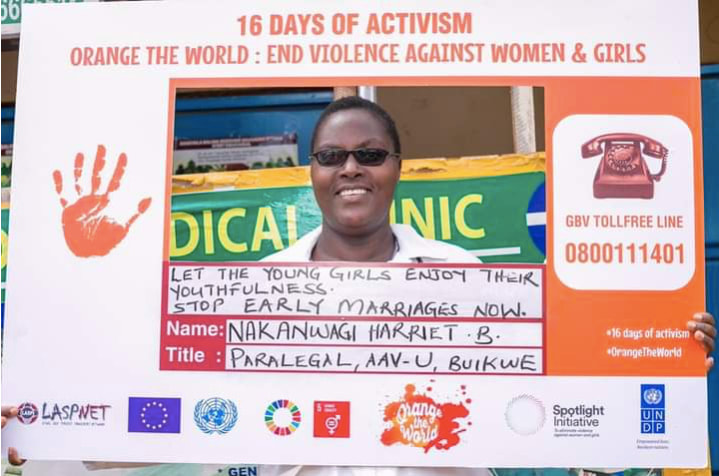
The above image demontrates Ms. Nakanwagi's efforts to sensitize the masses about GBV on a local radio station. To the left, she commits to additional innovative approaches to raising public awareness about Gender-Based Violence. These images and all the photos for this story are from her archives and used with permission.
Ms Nakanwagi welcomes your contacts via her email [email protected] |
DATELINE: Summer, 2017
KICKING CHOLERA OUT!
|
|

|
A recent cholera outbreak in my region of Uganda prompts me to write this story as a reminder of the the misery cholera causes — and the causes of cholera -- as well as to report, with pride, on the actions and fortitude of fellow Ugandans who are working to prevent re-occurrence and to strengthen our region to be healthier overall.
As the United Nations celebrates ‘World Toilet Day’ on November 19, every year — with this year’s theme ‘A Time for Action’ — it is clear that this message means much to us ‘at the grassroots’ of this continuing challenge to global health. Of course, this outbreak is directly related to UN Sustainable Development Goal # 6 — Clean Water and Sanitation. But it is also connected to SDG # 3 – Health & Well-Being. And —because clean water costs more than the poorest can afford — SDG # 1 — Poverty is related — as is SDG # 11 — Sustainable Cities & Communities — because improved toilet facilities are still needed.
|
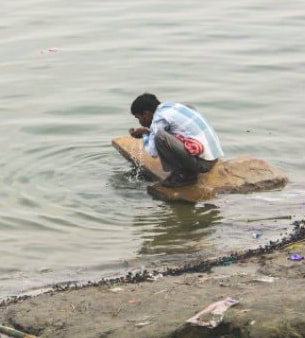
On September 26th, 2017, a grouping of 30 cholera patients arrived at the Bwera Hospital where I work — in the Kasese District of southwestern Uganda, on the border with the Democratic Republic of the Congo. Five people died, before the outbreak could be contained.
To discover more details, I went to the Bwera Hospital and found one nurse on duty — in an area of isolation set-up to keep the infection contained. I asked him about the number of cases so far, since the first day. He reported that 182 people had been admitted, 173 discharged while three who had died, there.
To discover more details, I went to the Bwera Hospital and found one nurse on duty — in an area of isolation set-up to keep the infection contained. I asked him about the number of cases so far, since the first day. He reported that 182 people had been admitted, 173 discharged while three who had died, there.
After all this, Uganda Red Cross Society and UNICEF and the World Health Organization came to intervene and health workers went 'to the ground' — into the community — to sensitize people about how to improve sanitation, use safe water only and report any suspected cases to the nearest health facility.
Next: Taking Community Action!
“Health workers went 'to the ground' to sensitize people about how to improve sanitation and use clean water..... This activity is paramount for this area — just at the right time — where everyone needs it now!”
|
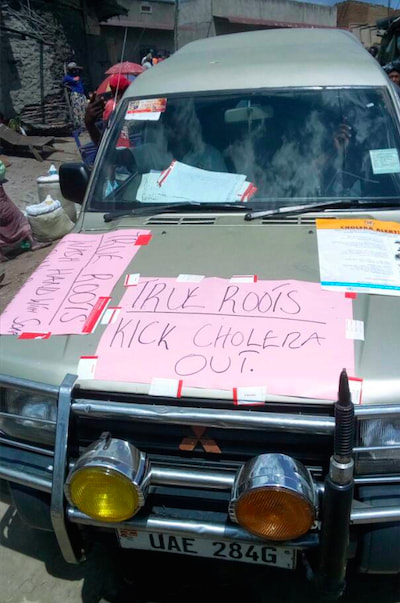
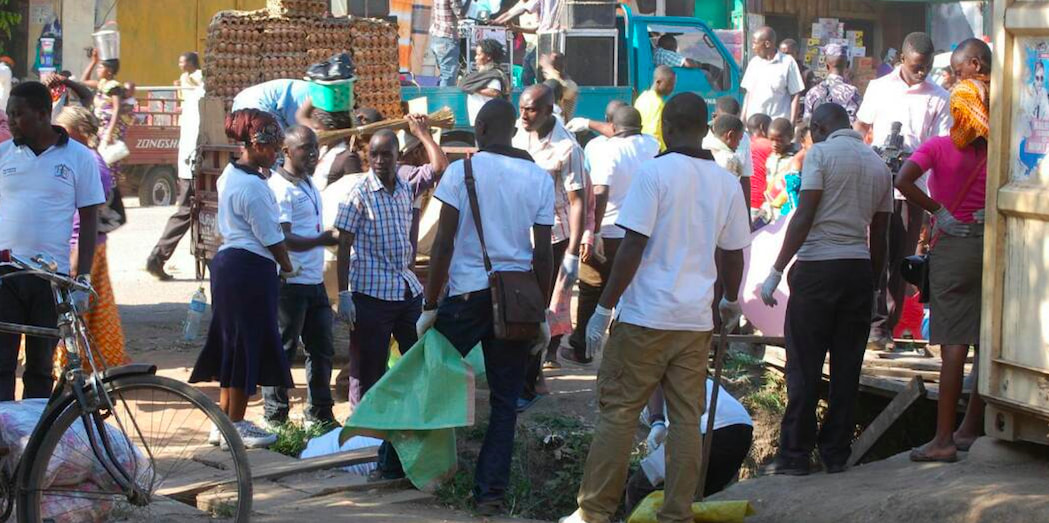
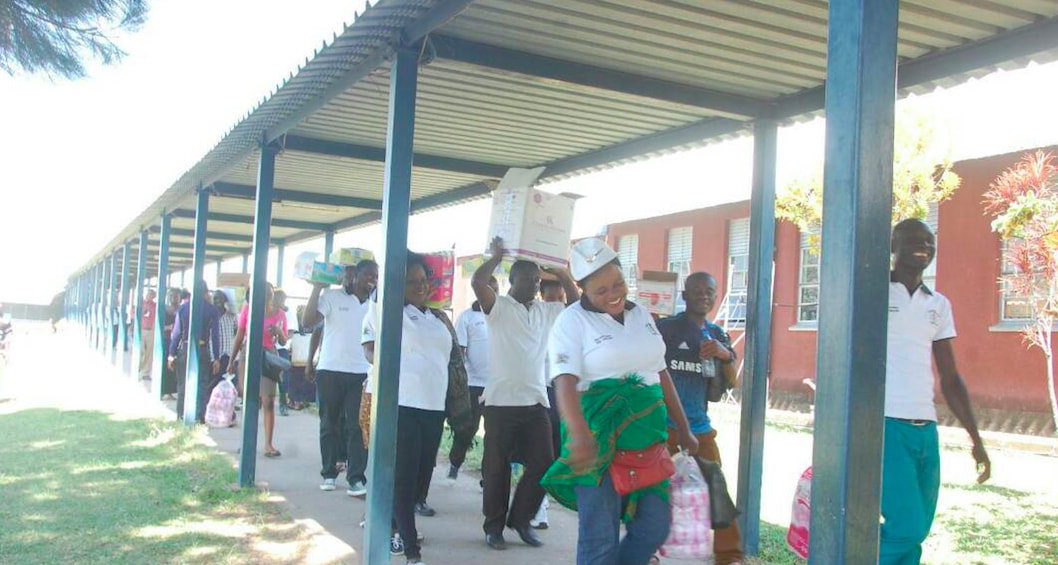
Looking to address this need with local action, the nearby Mpondwe lhubiriha Town Council (MLTC) activated a community response team called the ‘TRUE ROOTS Association’ — to establish improved cleanliness in the MLTC and ‘Kick Cholera Out!’
Their joint effort removed cabbages on street and garbage from ditches, cleaned toilets for people and sensitized the community to safe water and sanitation lessons. The Lord Mayor of the Town Council was joined in these efforts. This activity is paramount for this area — just at a right time — where every one needs it now! Photos of their cleaning activities are included here, at the left and below. 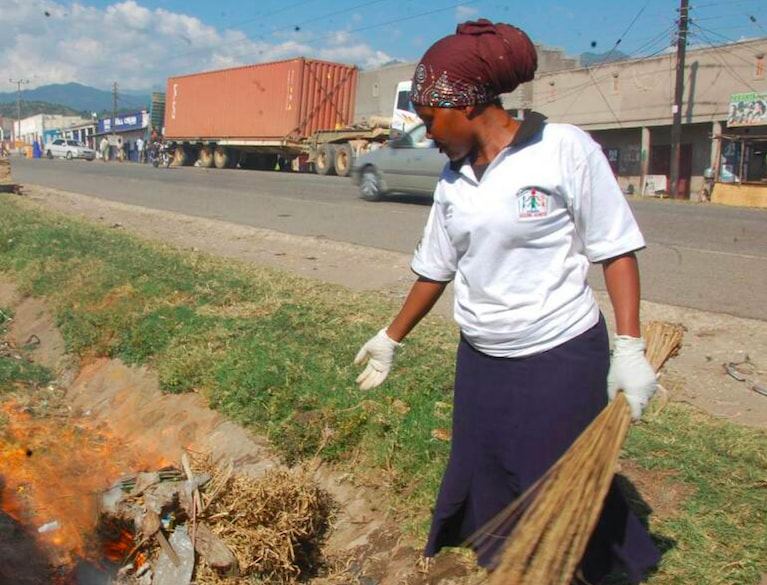
|
About the Author: Mr. Bwambale Fauza has served a leading Ugandan Registered Nurse serving as Regional Coordinator over five District Health Services in the southwest mountainous region of the country, on the borders with the DRC (Democratic Republic of the Congo) and Rwanda. His responsibilities included health care administrative oversight and medication delivery audits for nine Health Care Service Facilities serving a primarily Muslim population of 3 million people (6 million in the region) with an ongoing administrative schedule of motorbike visits over rural roads to each Facility. He is proficient in four languages, English, Swahili, Lukinzo and Luganda. Mr. Fauza holds a Diploma in Nursing obtained at the Kagando School of Nursing and Midwifery in 2008. He has also completed short courses in STDs, HIV-AIDS, malaria prevention, care support and communication, as well as Guidance & Child Counseling and Home Nursing Care and related support. Previously he was employed by the Kasese District Local Government and was posted at the private health centre Mpondwe Muslim Health Centre since 2009. In 2019, he moved to Canada to establish a new life for his family. He currently serves as a Primary Support Worker and aims to achieve his Canadian Registered Nursing Bachelor's Degree in able to return to sharing his full nursing knowledge and many skills to the Canadian healthcare system.
Image Credits: TOP IMAGE: https://www.harpersbazaar.com/uk/travel/a30170475/uganda-why-you-need-to-visit-the-garden-of-africa/
ABOVE: SDG Logo #s 1, 3,, 6 , 11, 13, 14, & 15 used with UN Guidelines.
Photo of Mr. Fauza from his archives, used with permission. BELOW: 'Kick Cholera Out' activities provided by Bwambale Fauza through the TRUE ROOTS Association and the Mpondwe lhubiriha Town Council, used with permission.